The material
Fourteen stones.
No two slabs alike.
The catalogue is not of models: it is of stones. The design changes — Vox Lucis, Stele Lucis — the slab never repeats.

Loading the catalogue…
A case apart
Onyx lights up.
The lighting has been in the design since the first drawing: a ring around the tweeter, a line on the side. On an opaque stone the light runs alongside it.
Onyx is translucent. The internal light passes through it, and the veins light up from inside like stained glass. The loudspeaker stops being a dark object in a corner and becomes the light source of the room.
It requires a different calibration of the lighting and sound slabs of large format, which are few. It is the hardest piece to produce, and the one worth seeing in person.
The making
Marble does not forgive.
Wood can be got wrong: you fill it, you sand it, you try again. Stone cannot. Every hole is final, and a ruined slab is a slab thrown away — along with its vein, which exists nowhere else.
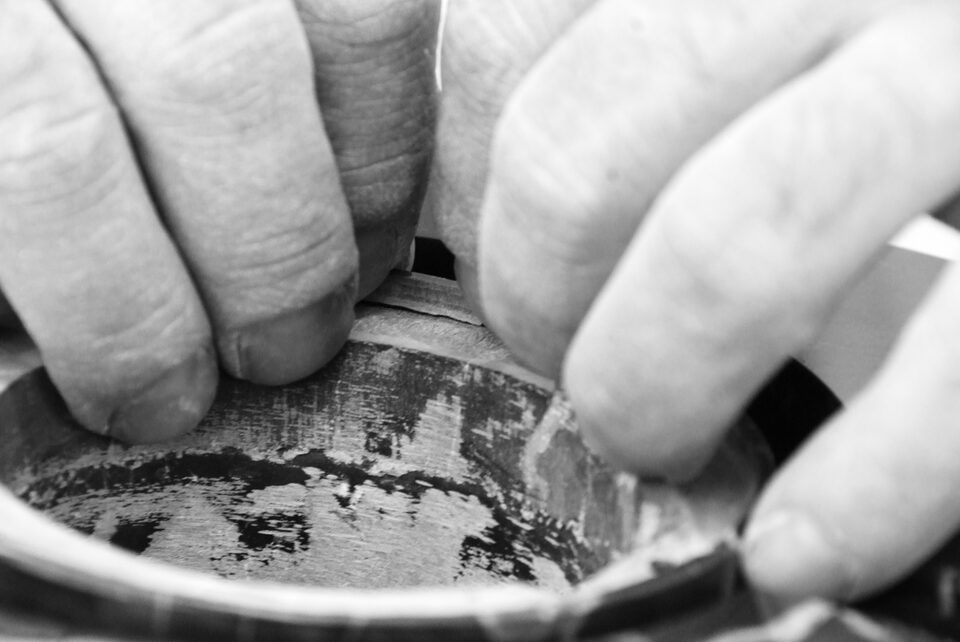
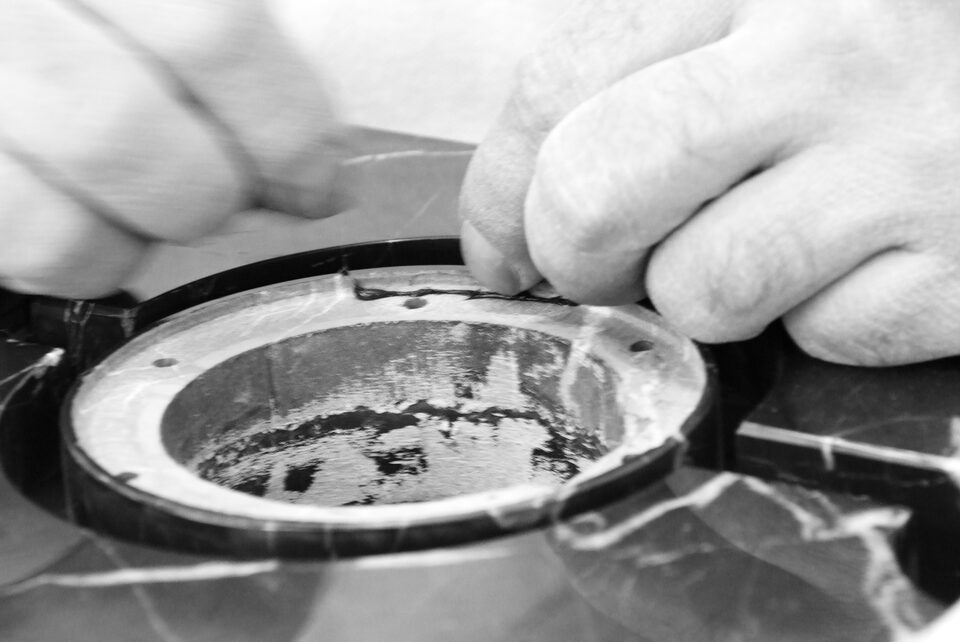
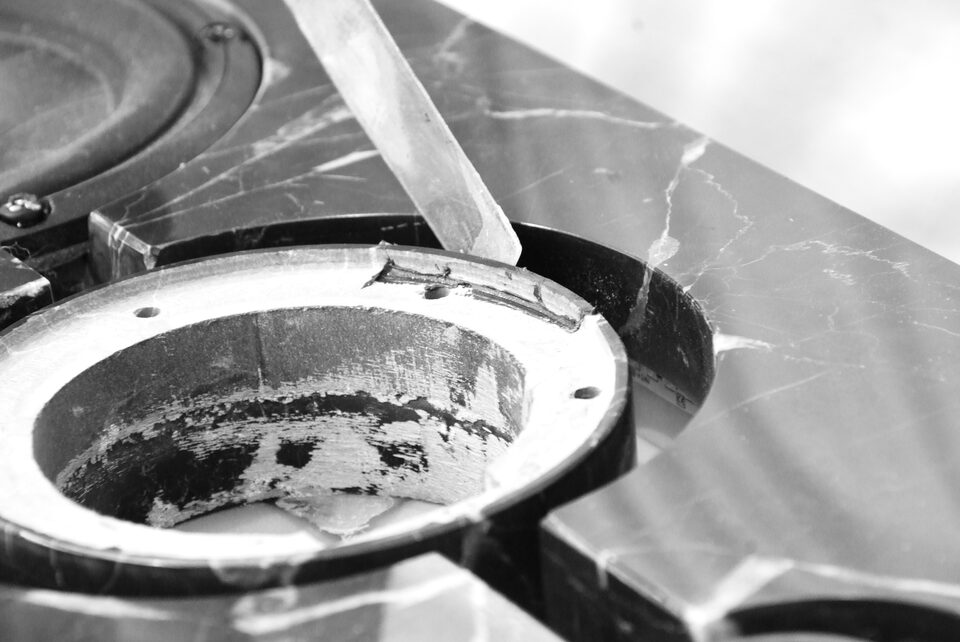
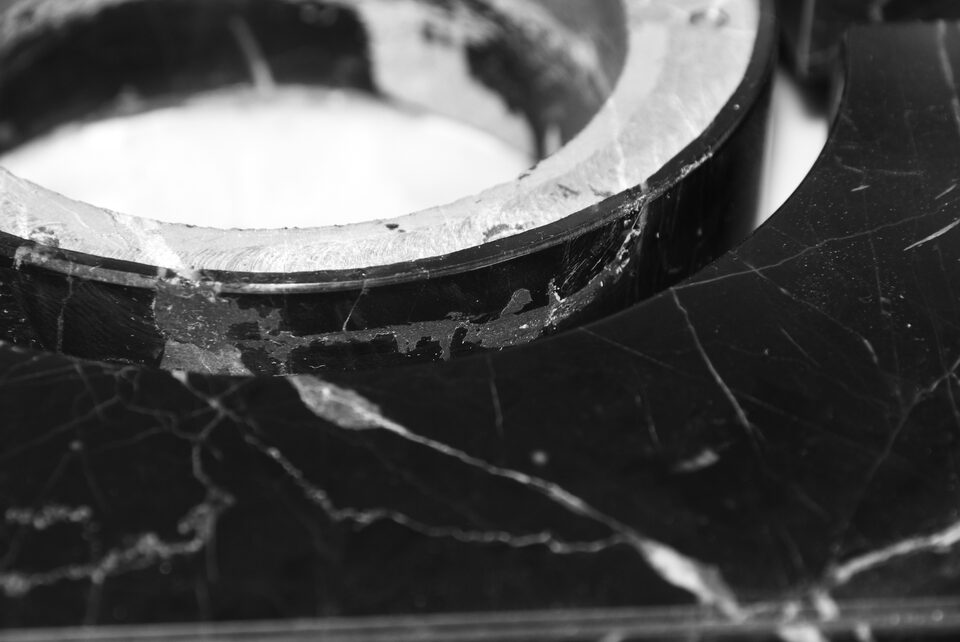
That is why the seat of every driver is opened, chamfered and finished by hand, one piece at a time, in a workshop that has been working stone since long before anyone thought of making a loudspeaker out of it. And where absolute mass and silence are needed — the Basis Gravis, and, on Stele Lucis, the base and the plinth — the stone is not assembled from slabs: it is carved from the solid, hollowed out of a single block.
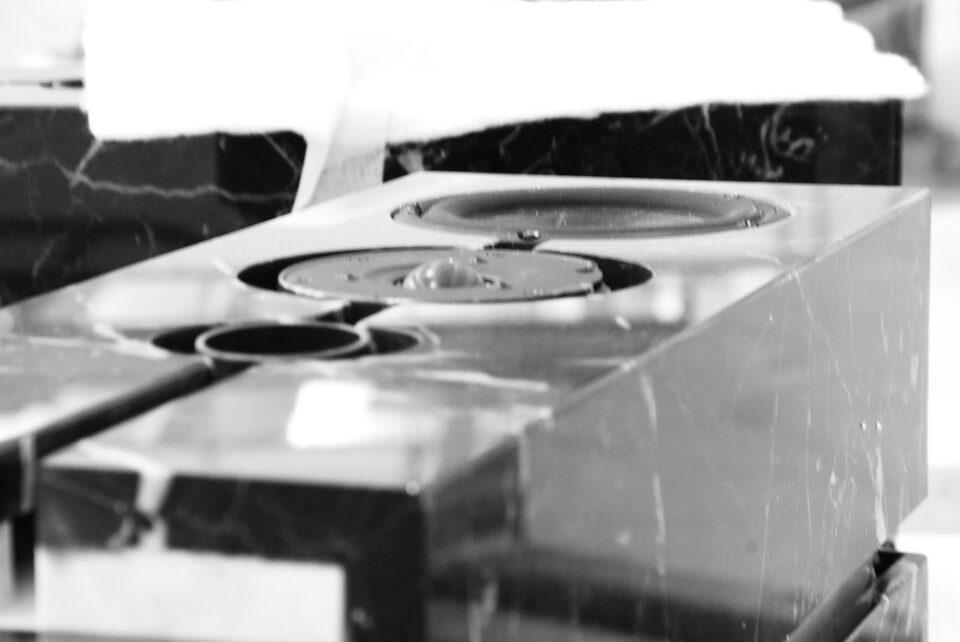
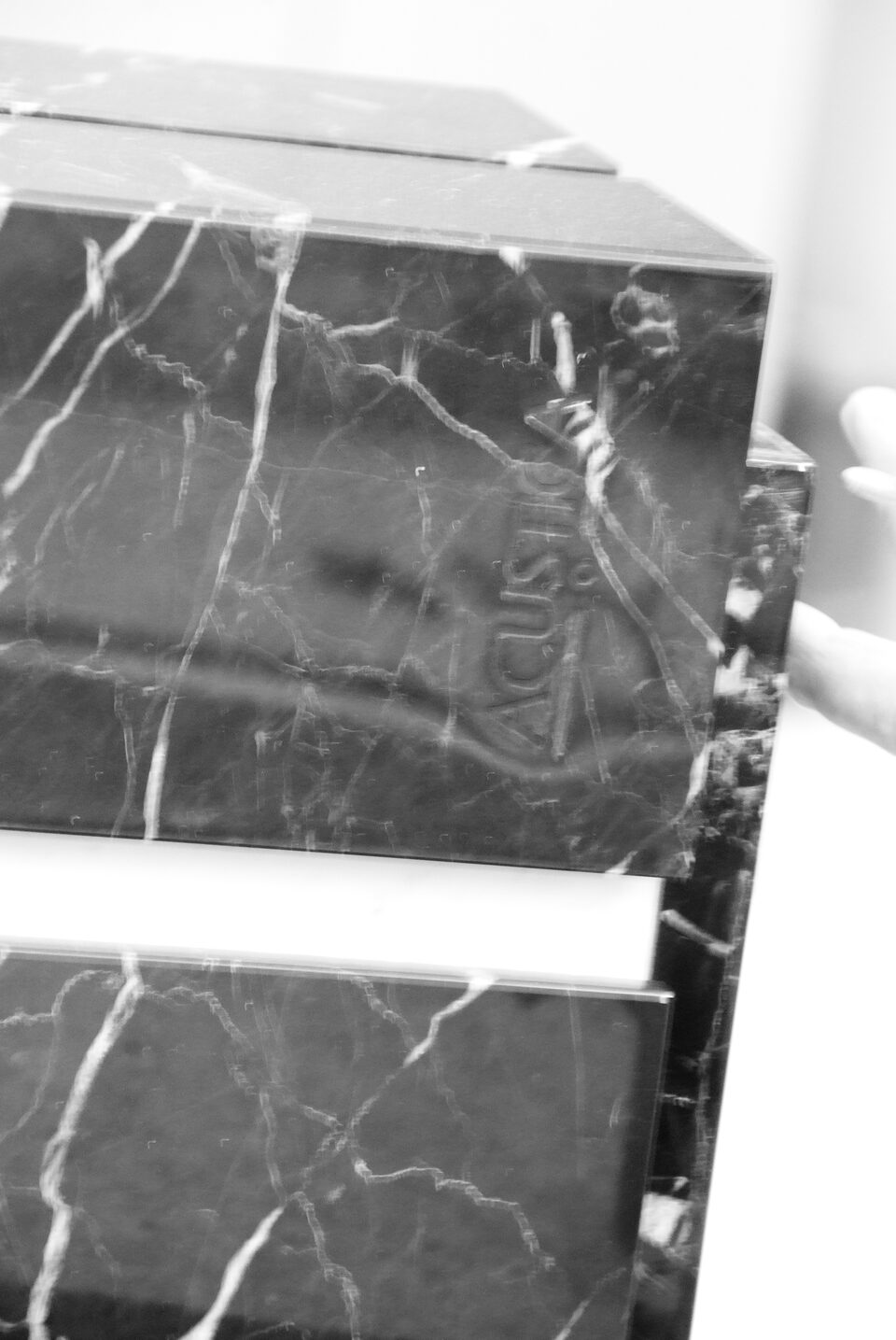
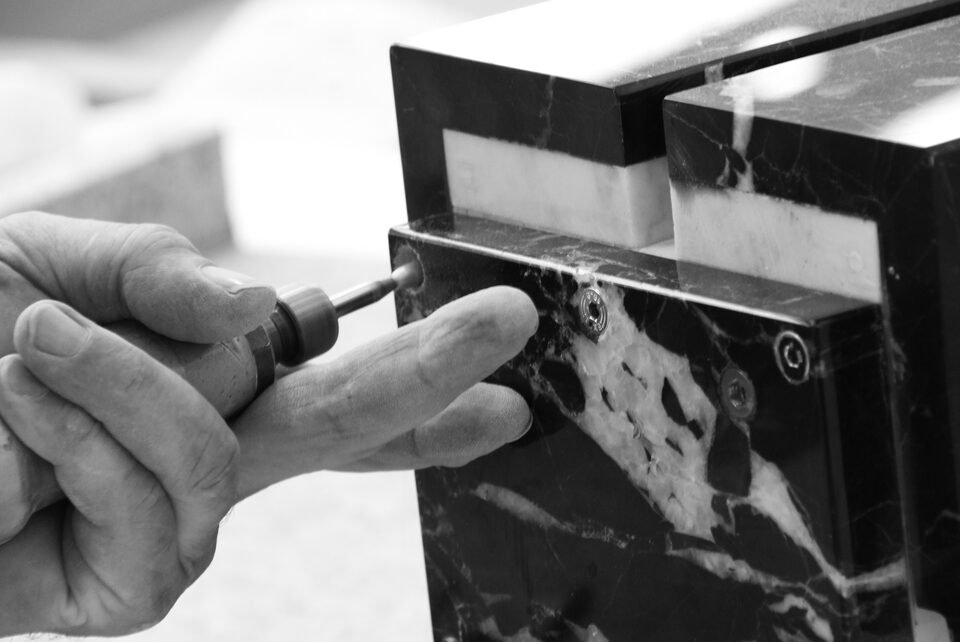
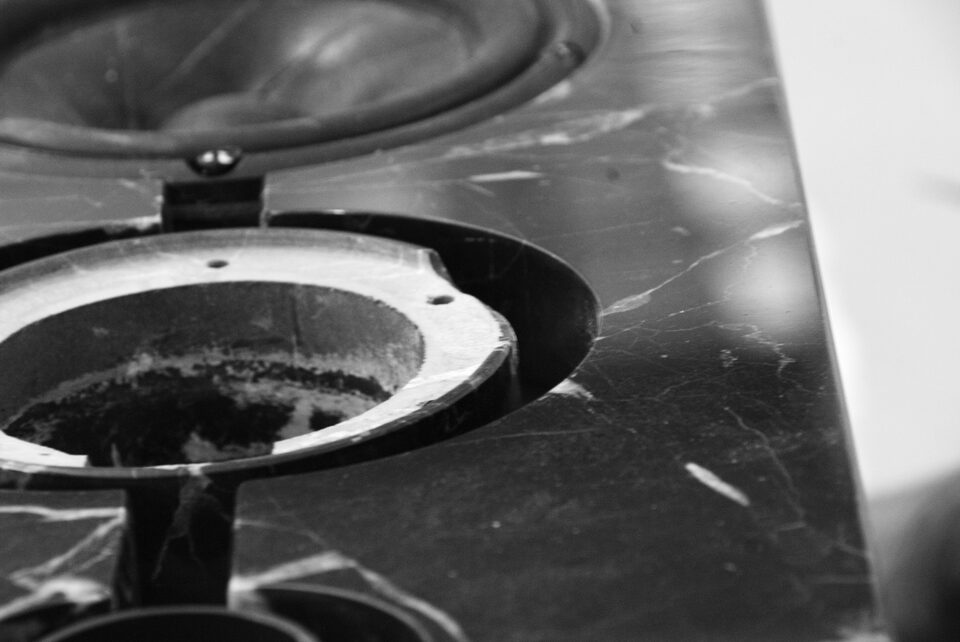
Stone is chosen in person.
Photographic samples are there to choose the character of a stone. To choose your slab, you look at the real slab.